Every job below is one we do ourselves across Boston.
A driveway slab takes the weight of your car every day and the brunt of New England frost heave every winter. We pour at least 4 inches thick over a compacted gravel base, with rebar through any section that'll see a vehicle turn or back up. We saw-cut control joints within the first 24 hours so the slab cracks where we tell it to, not across the middle where you'll see it from the kitchen window.
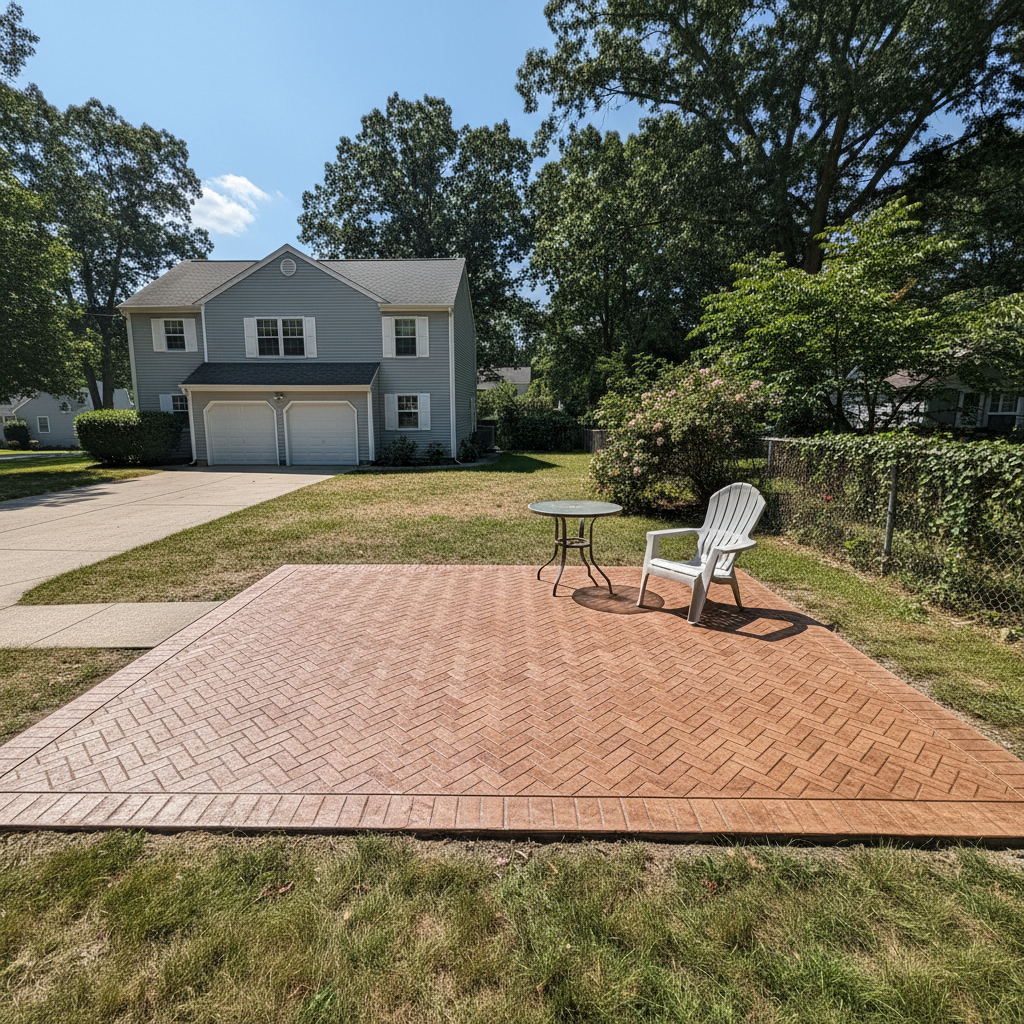
Patios don't carry cars, so we can run a thinner pour, but drainage still decides whether it lasts. We pitch every patio slab away from the house, about a quarter inch per foot, so water doesn't pool against your foundation or sheet back toward the door. Broom finish, exposed aggregate or a stamped pattern, the base work underneath matters more than the finish on top.
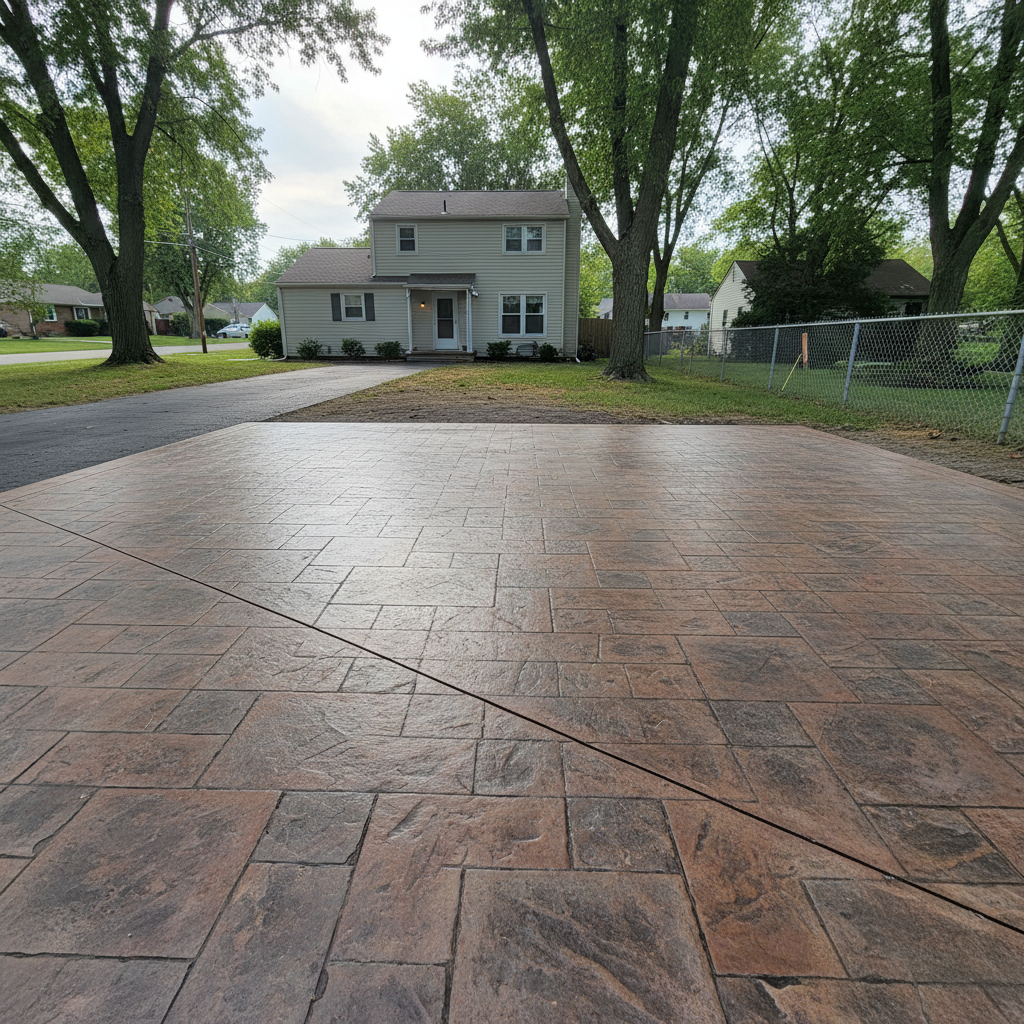
Stamped concrete gets you the look of slate, brick or cobblestone without the cost of actually setting stone. We color the concrete through the mix and stamp it while it's still plastic, usually within an hour or two of the pour, so the texture holds. Sealing it every two to three years keeps the color from chalking out under salt and plow damage.
Front steps and walkways take a beating from boots, salt and ice melt all winter. We reinforce the treads with rebar, not just wire mesh, because a cracked step tread is a trip hazard you don't want. Walkway slabs get the same control joints as a driveway, spaced to match the width so you don't get a random crack through the middle of a panel.
Sheds, garages and pole barns all need a slab that won't heave or settle under them. We dig past the frost line, lay compacted gravel, and set rebar or mesh depending on what's going on top. Give it a week before you drive equipment onto it, it needs closer to 28 days to hit full strength.
Spalling, flaking and surface cracks usually mean water got into the slab and froze. Fixing a crack also means figuring out why it opened up, whether it's a settling sub-base or a joint that was never cut. Small cracks we rout and fill, bigger sections we cut out and repour so the patch doesn't stand out as a different slab.
Hairline cracks in a foundation wall are usually just shrinkage, but a crack wider than a quarter inch or one that's stepping sideways through the blocks is a different problem. We patch and seal what's cosmetic and bring in steel bracing or underpinning when the wall's actually moving. Boston's clay soil shifts enough with the seasons that we always check the grading and drainage outside before we touch the inside.
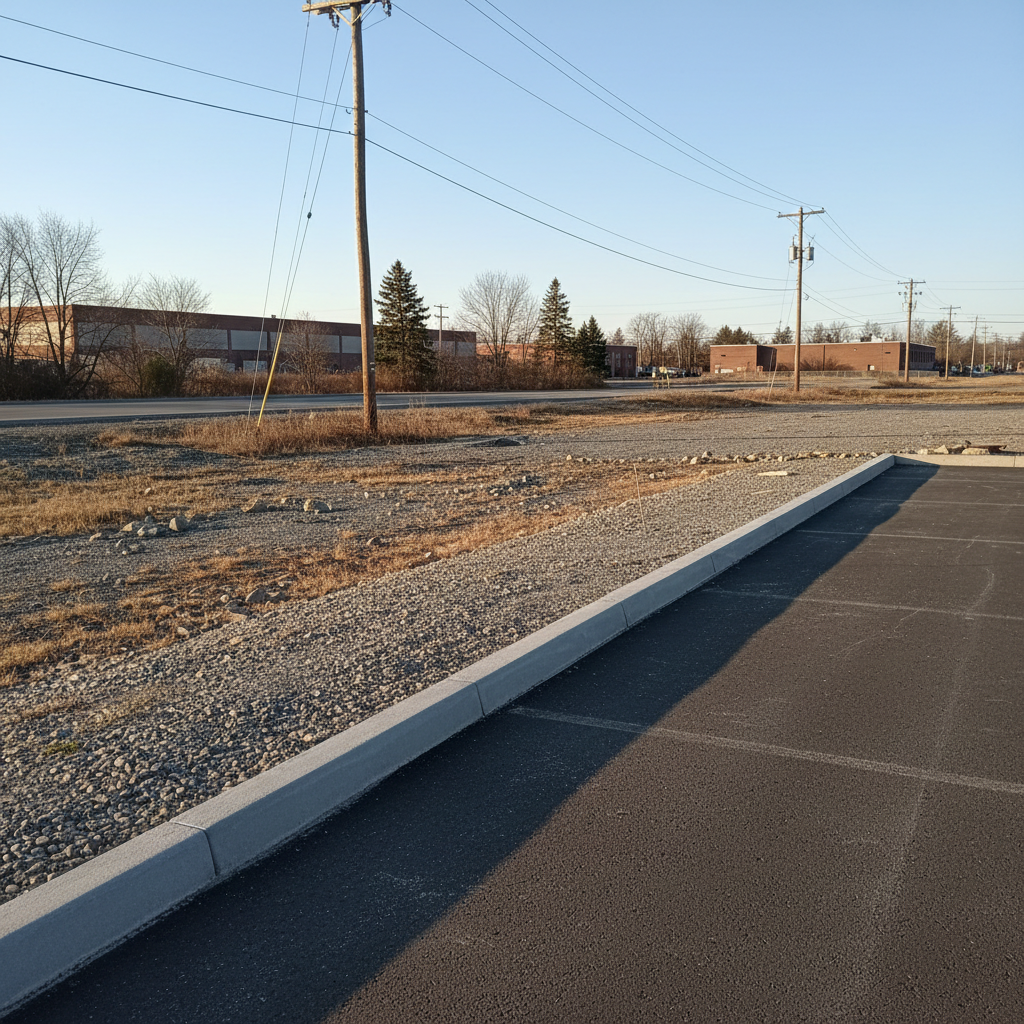
Public sidewalks have to meet the city's slope and width specs, especially where they tie into a curb cut or ramp. We know the panel sizes Boston inspectors expect and we pull the permit before we break ground. A sidewalk panel that heaves from a tree root gets cut out and replaced square, not patched over.
If the slab underneath is sound but the top layer is pitted, scaled or just worn from years of salt, resurfacing skips the full tear-out. We grind the surface, apply a bonding agent, then overlay a thin layer that can be stamped or colored same as a new pour. It won't fix a slab that's cracked through or settling unevenly, that one needs a real repour.
A retaining wall holds back a slope so the yard above it doesn't slide into the driveway below. We build with poured concrete or block depending on the height and the load, and every wall over about 3 feet gets drainage pipe and gravel backfill behind it. Skip the drainage and the wall's fighting hydrostatic pressure it can't win.
Four steps, and no surprises in any of them.
You tell us what you want doing, we look at what is actually there, and we ask the awkward questions early.
In writing, itemised, free. If something might add cost later we flag it now rather than at the end.
Same crew throughout. We cover your floors, keep the dust down and tidy up before we leave each day.
You point out anything you are not happy with and we fix it before the invoice, not after.
Site conditions and permit rules shift from town to town, so local experience matters.
Questions that come up once a project is actually underway.
Describe the problem and we will tell you what it probably is. No obligation.