
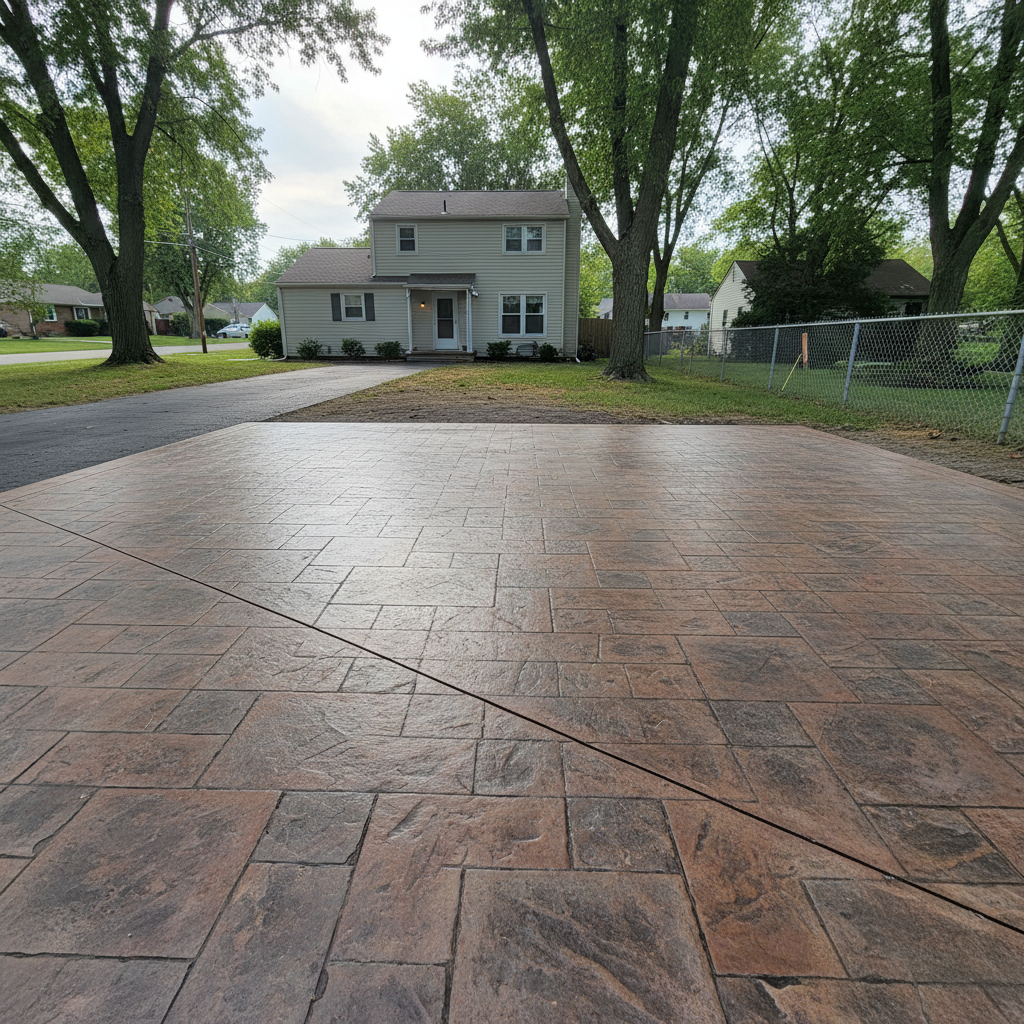
Concrete work looks simple from the sidewalk. Mix it, pour it, smooth it, done. What you can't see is the part that decides whether your new driveway is still flat in five years or heaving and cracked by the second winter. Choosing a contractor well means knowing enough about the trade to ask the right questions, and knowing which answers should send you looking elsewhere.
Start with what's actually under your yard
Boston isn't one kind of ground. A lot of South Boston, East Boston, and the Back Bay sits on 19th-century fill, land that used to be tidal flats or marsh before it was built up with gravel, ash, and whatever else was on hand at the time. Dig into a yard in those neighborhoods and you can hit old brick, cobblestone, even buried timber cribbing. A few miles south in Quincy, you're dealing with the opposite problem: ledge rock close to the surface, the same granite the city quarried for a century. That changes how deep a footing can go and whether the job needs a jackhammer before it needs a mixer.
A contractor who's done real work in the area will ask about your soil before they quote a price, not after. They should want to know if you're near the Neponset, the Charles, or any other wetland-adjacent property, because that can trigger a Conservation Commission review before a shovel goes in the ground. If a bidder never asks what's under the yard, they're pricing the job blind.
What a real bid should include
A proper estimate for a driveway, patio, or slab should spell out the thickness of the pour, the PSI of the mix, and what's reinforcing it. Four inches is standard for walkways and patios. Driveways that see cars and plow trucks should run 5 to 6 inches, with a 3,500 to 4,000 PSI air-entrained mix. Air entrainment matters more here than in most of the country: it builds tiny air pockets into the concrete so water trapped in the slab has somewhere to go when it freezes, instead of cracking the surface from the inside. Skip it and you'll see pitting and spalling by the second or third winter, especially where rock salt sits on the surface.
Ask whether they're using rebar or wire mesh. Mesh is cheaper, but it has to be held up on chairs during the pour or it sinks to the bottom of the slab and does nothing. Rebar, usually #3 or #4 bar tied into a grid, holds its position better and handles the freeze-thaw movement New England throws at a slab every winter. Either can work. What can't work is mesh laid flat on the gravel and never lifted, which happens more than homeowners realize.
The red flags that mean walk away
- A quote that's dramatically lower than every other bid. Concrete, rebar, and gravel base cost roughly the same no matter who's buying them. A price that's 30 to 40 percent under everyone else usually means a thinner slab, no rebar, or a plan to skip the permit.
- Cash-only pricing with no contract. Massachusetts requires a written contract for home improvement work over a few hundred dollars, and a legitimate contractor should be registered with the state's Home Improvement Contractor program.
- No mention of a gravel base. A slab poured straight onto native soil, especially clay-heavy soil that holds water, will heave and crack. There should be 4 to 6 inches of compacted crushed stone under any driveway or patio, more over soft or wet spots.
- Vague answers about joints. Every slab needs control joints cut into it, usually within 24 to 48 hours of the pour, spaced roughly 8 to 12 feet apart on a 4-inch slab. These joints tell the concrete where to crack as it shrinks, instead of letting it pick its own spot down the middle of your driveway.
- No pitch for drainage. Concrete should slope away from the house, about a quarter inch per foot, so water runs off instead of pooling against the foundation.
Permits, inspections, and why skipping them bites you later
In Boston proper, the Inspectional Services Department handles permits for most concrete flatwork tied to a structure, and for anything that changes drainage or sits near a property line. Surrounding towns, Cambridge, Somerville, Newton, Quincy, Brookline, Medford, each run their own building department, and the paperwork isn't identical town to town. A legitimate contractor pulls the permit, not you, and should know roughly what inspections apply: forms and base before the pour, sometimes rebar placement, occasionally a final check.
Skipping the permit might save a week. It also means no one verified the base depth or the reinforcement before it got buried under concrete. If you ever sell the house, an unpermitted driveway or slab addition can turn into a problem at the home inspection, and fixing it after the fact means breaking out concrete that already looks fine. If your lot backs up to wetlands or a flood zone, which isn't rare near the Neponset or the Charles, expect an extra layer of review through the local Conservation Commission before any permit gets issued.
Timeline, weather, and what should be in writing
Concrete cures on its own schedule and no contractor can rush it without consequences. You can usually walk on a new slab after about 2 days. Light vehicle traffic is generally fine after 7 days. Full strength, the number the PSI rating is actually based on, takes 28 days. A contractor who tells you to drive on a new driveway the next day either doesn't know better or doesn't care.
Boston's climate adds its own wrinkle. Concrete shouldn't be poured when temperatures are heading below 40°F without cold-weather additives or insulated blankets over the fresh pour, and that matters here because the region sees its first hard frost as early as late October and its last as late as April. On the other end, a hot, dry July pour can skin over too fast on top while the inside is still wet, so a contractor working in summer should be misting the surface or using a curing compound to slow it down. Ask when they're planning to pour and whether the forecast changes that plan. A contractor who won't move a pour date around bad weather is telling you something about how they treat the rest of the job too.
Get the mix design, the thickness, the reinforcement, the base depth, and the joint layout written into the contract, not just promised over the phone. If a company can put that on paper without hesitating, they've done this enough times to know it cold. That's the kind of detail you want from whoever ends up with your deposit. You can see how we lay all of this out on real jobs on our Granite Concrete Construction site, and it's worth comparing that level of detail against any other bid you get.